


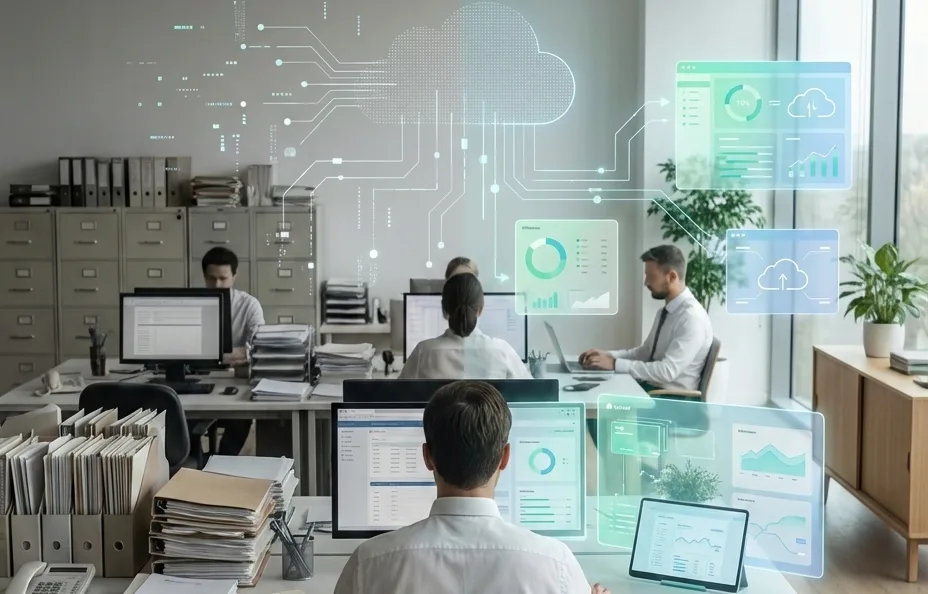
Why Are Modern Businesses Moving to ERP?
In today’s fast-paced digital economy, businesses can no longer rely on disconnected systems, spreadsheets, or manual processes. As companies scale, operational complexity grows—and that’s where ERP systems become essential.
Centralized Data, Better Decisions
ERP platforms unify finance, sales, inventory, purchasing, and production data in a single source of truth. This enables leaders to make faster, data-driven decisions without chasing reports from multiple tools.
Improved Efficiency Across Teams
Manual data entry, duplicated work, and human errors slow businesses down. ERP automates workflows, reduces repetitive tasks, and allows teams to focus on higher-value work.
Scalability for Growth
Modern ERP systems are designed to scale with your business. Whether you expand into new markets or add new product lines, ERP adapts without disrupting operations.
Cloud ERP: The New Standard
Cloud-based ERP solutions offer lower infrastructure costs, automatic updates, and secure remote access—making them ideal for modern, distributed teams.
Conclusion:
ERP is no longer a luxury—it’s a strategic necessity for businesses that want to grow sustainably.